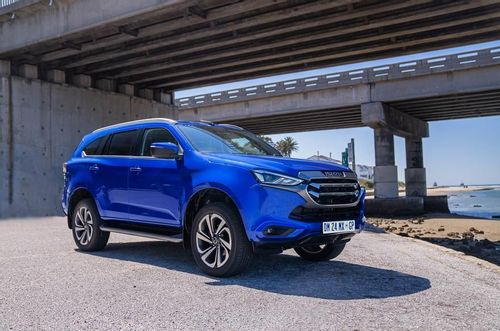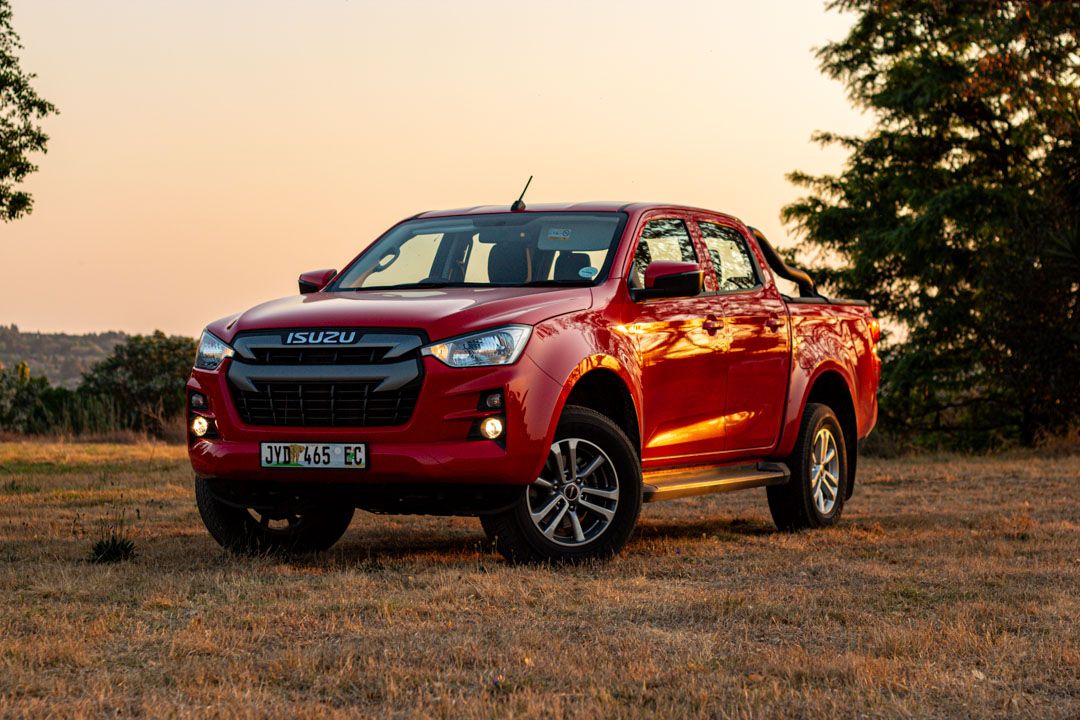
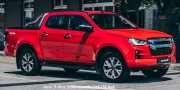
We get behind the wheel of the new ISUZU D-MAX LS
If you have been keeping an eye on the latest bakkie news within our borders you will know that the competition is tough, the Hilux and Ranger jostle for the top spot on a monthly basis. Manufacturers are constantly updating their offerings to ensure that they remain relevant. Some, such as GWM have introduced a vehicle that offers decent value for money which has become very popular. ISUZU has been somewhat stagnant, until now. They recently introduced the all-new D-MAX and we got behind the wheel.
The all-new ISUZU D-MAX is the seventh generation of ISUZU bakkies to be manufactured in Gqeberha over the past 42 years, and is the culmination of a R1.2 billion investment in Isuzu’s local operations, announced in 2019. It is produced for the domestic market in South Africa, and exported to 25 left and right-hand drive markets across the African continent.
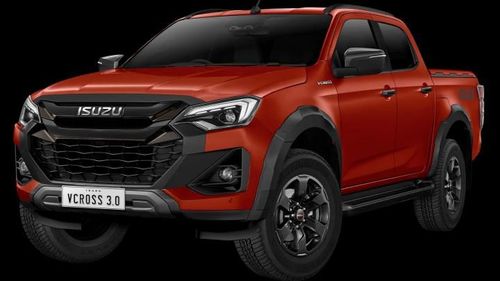
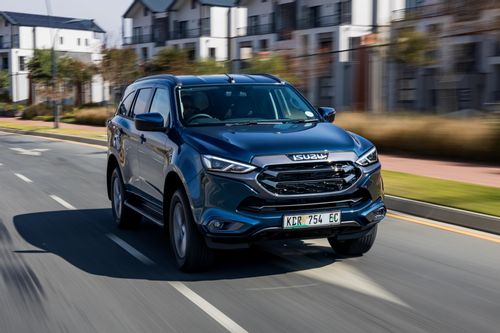
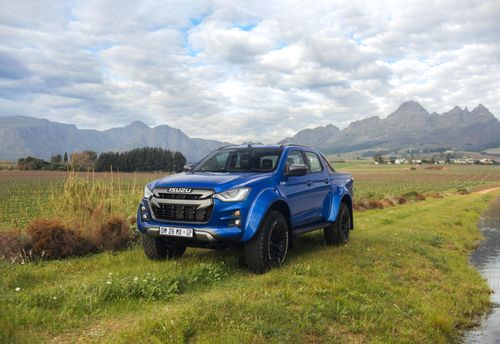
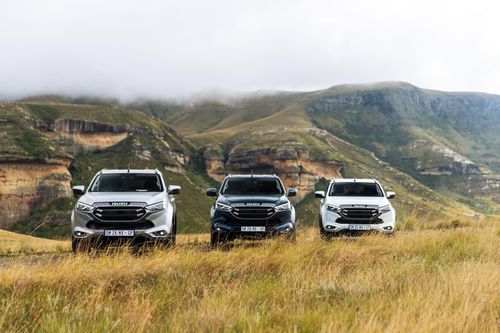
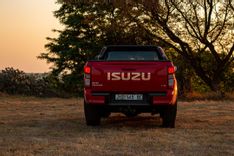
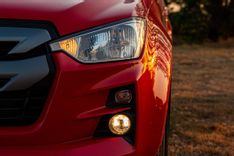
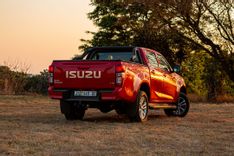
Emphasising its rugged, yet modern and refined look, the all-new ISUZU D-MAX is bolder and sportier than ever. This is clearly evident by the fresh and more aggressive front fascia and grille, centred around a modern interpretation of the established ISUZU D-MAX design cues.
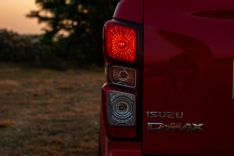
Slimmer, more angular lights that include Bi-LED projector headlamps and LED daytime running lights on the high-series models give the new ISUZU D-MAX distinctive on-road presence. This is complemented by LED edge lighting for the turn indicators on the mirror housings, crisp new LED combination tail lamps and an integrated LED high-mount brake light at the rear that continues the contemporary theme.
The enhanced sense of quality and attention to detail in the design is highlighted with the minimised panel gaps between the doors, as well as between the cabin and cargo box, while the integrated two-step rear bumper is seamlessly incorporated into the sleek and sophisticated lines of the new ISUZU D-MAX.
Despite its more athletic appearance, the new ISUZU D-MAX is bigger and more spacious in all key areas, other than the roofline which is 10 mm lower than the previous model. The bonnet and load area have been heightened by 15 mm and 30 mm respectively, while the wheelbase has been extended by 30 mm for greater optimisation of the cabin structure.
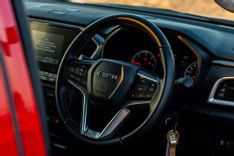
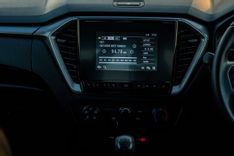
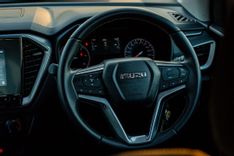
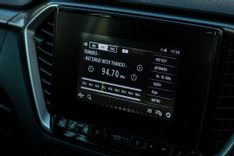
It is more akin to that of a passenger car with sharp graphics and a variety of layered and textured surfaces with soft-touch materials – most noticeably on the dashboard – that provide a tactile, quality feel throughout. The new dashboard layout lifts the game with an elegant, simplified layout that positions the controls and switches within easy reach.
Overall interior space has been improved with increased legroom at the rear. The rear seat positions have been moved outward for a 20 mm increase in shoulder room, and the rake of the backrest has been increased for greater comfort.
The driving position can now be further optimised thanks to an increased range of seat adjustment and the use of a smaller-diameter steering wheel – the latter now incorporating up to 20 mm telescopic adjustment, further reinforcing the more car-like driving position.
Isuzu’s 1.9-litre Ddi power plant is a new powertrain to the ISUZU line-up and is standard on all Single Cab models and is available on Extended Cab and Double Cab derivatives. It uses common rail direct injection to produce a maximum power output of 110 kW at 3 600 r/min, with peak torque of 350 Nm available between 1 800 to 2 600 r/min, delivering superb fuel economy and low running costs.
Out on the road we found the engine to be more than capable of dealing with everyday traffic. It has decent low-down torque and the gearbox has been well calibrated with the motor. It shows its smaller capacity when you are in a rush, but we doubt that this will deter customers. Further highlights include the ride quality which is extremely different form that bakkie it replaces, for starters it is more comfortable and seems to handle rough terrain much better.
ISUZU has a reputation in SA, one of reliability and loyalty. Their main issue over the past few years has been the lack of new models, that has now changed. The new ISUZU is an impressive contender in the highly competitive bakkie segment.
Also worth a look: the Isuzu D Max and the Isuzu D Max.
FAQ
Q: What does the ISUZU D-MAX LS cost in South Africa?
The ISUZU D-MAX LS is priced from around R620,000 for the single cab variant, with the double cab versions starting at approximately R680,000, making it competitive against the Toyota Hilux and Ford Ranger in the premium bakkie segment.
Q: Is the new ISUZU D-MAX worth buying over a Toyota Hilux?
The new D-MAX offers excellent value with its R1.2 billion investment showing in build quality, modern LED lighting, and refined design, but the Hilux still edges it on resale value and dealer network coverage across South Africa.
Q: What engine does the ISUZU D-MAX LS have?
The D-MAX LS features ISUZU's proven 3.0-litre turbodiesel engine producing around 140kW and 450Nm of torque, paired with either a six-speed manual or automatic transmission depending on the variant you choose.
Q: How does the ISUZU D-MAX compare to the Ford Ranger?
The D-MAX matches the Ranger on towing capacity at 3,500kg and offers similar tech features, but the Ranger currently has a slight edge in interior refinement and off-road capability, though the D-MAX wins on value for money.
Q: Should I buy the ISUZU D-MAX LS in 2024?
Yes, the D-MAX LS represents solid value at around R680,000 for the double cab, offering modern features, strong build quality from the Gqeberha plant, and ISUZU's reputation for reliability, making it a smart alternative to the dominant Hilux and Ranger.
Should You Buy It?
The best value premium bakkie under R700,000 in South Africa is the ISUZU D-MAX LS double cab at around R680,000. ISUZU's R1.2 billion investment shows in every detail, from the sleek LED lighting to the minimised panel gaps, and you're getting Gqeberha-built quality that's exported to 25 countries. Yes, you should buy it if you want Hilux reliability without paying Hilux prices, though die-hard Toyota fans might still opt for the resale value safety net. The D-MAX LS delivers the goods at a price that makes sense, especially if you're not bothered about having the most popular badge at the braai.